

In-Slab Floor Heating
ELEKTRA VCD35 In-Slab Heating
In-slab heating puts the heating cable inside the concrete floor of a new home. Once the slab is warmed, it holds that stored heat and releases it as a constant, gentle radiant heat through every room, with no radiators, vents or noise.
P.A.P. Heating Solutions has specialised in floor heating since 1988 and is the exclusive Australian importer of ELEKTRA heating cables. For in-slab work we use the ELEKTRA VCD35 cable.
How in-slab heating works
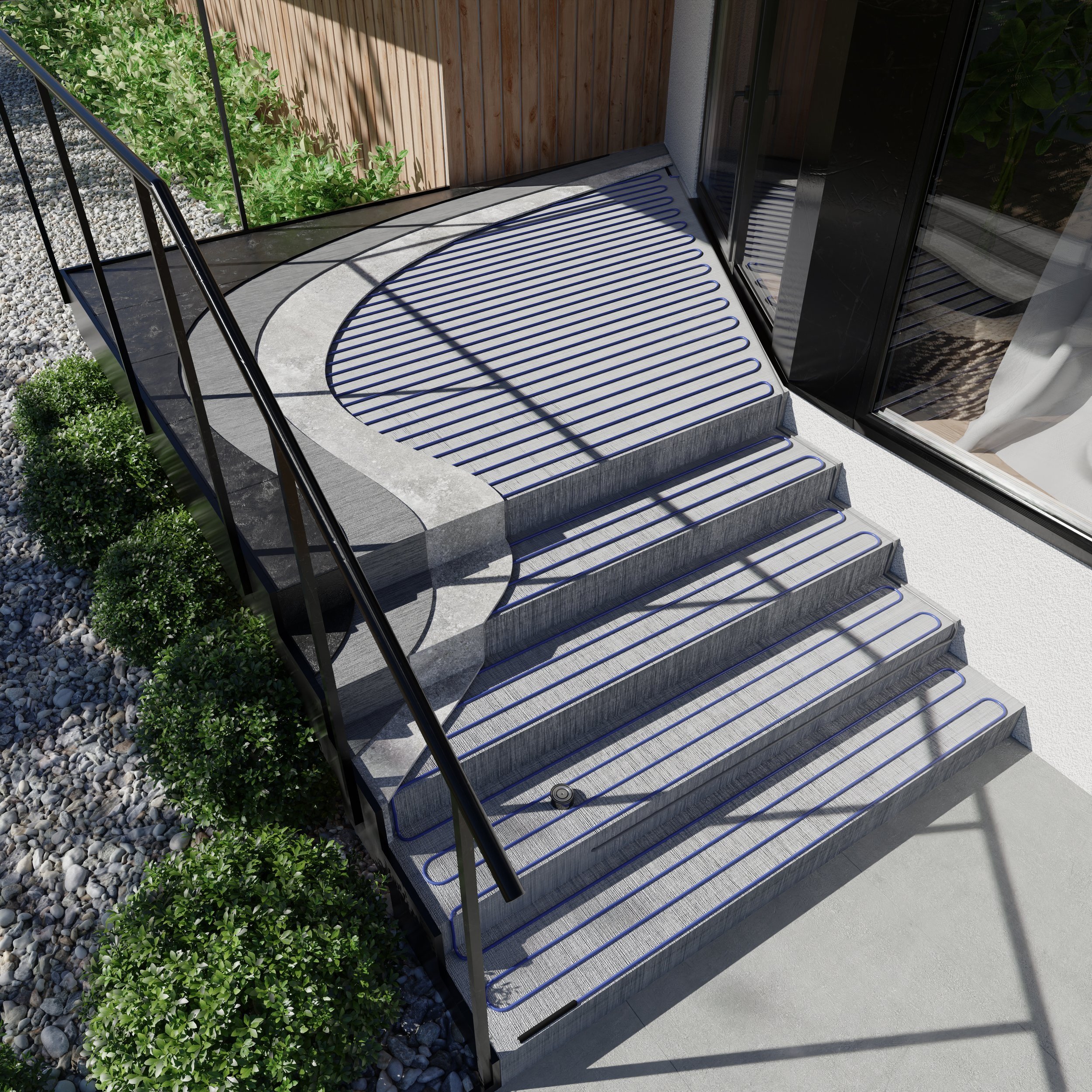
The cable is tied to the top layer of reinforcement mesh before the concrete is poured. Once the slab has cured, the cable warms the concrete and the concrete radiates its stored heat into the room. Because a slab stores so much energy, it can be heated during cheaper off-peak hours, or during the day while rooftop solar is generating, and keep releasing that warmth for hours afterwards.
In-slab heating suits:
New homes on a concrete slab, where the whole ground floor can be heated.
Large open-plan living areas that need even warmth from wall to wall.
Homes on off-peak or time-of-use tariffs.
Homes with rooftop solar, where the slab can store daytime solar power as heat for the evening.
For an existing slab, or a single room in a renovation, ELEKTRA DM20 set in self-leveller or screed is usually the better fit. See under-tile and in-screed heating.
The ELEKTRA VCD35 cable
VCD35 is a twin-conductor heating cable rated at 35 W per lineal metre, 240 V. Twin-conductor means both ends of the heating circuit sit in one cold tail, so there is a single connection back to the thermostat and very low electromagnetic fields.
Type: twin-conductor, series resistance heating cable
Rating: 35 W per lineal metre, 240 V AC
Insulation: XLPE, resistant to concrete, water and soil
Screening: aluminium tape and tinned copper braid
Factory test: 2,500 VAC dielectric test on every unit
Standards: IEC 60800, EN 60335-1
Cable warranty: 20 years
Floor coverings
In-slab heating works under tiles, stone, polished concrete, timber and carpet. Hard floors pass heat through fastest, which is why polished concrete and tiles are the most common finishes over a heated slab. If you are planning timber or carpet, tell us the product so we can check it suits and size the system for it.
Controls
Each zone has its own thermostat with a floor sensor, so living areas and bedrooms can run on different programs. The sensor sits in a capped protective conduit so it can be replaced later without breaking into the floor. Programmable and Wi-Fi models are available, and timers can be set to suit off-peak or solar hours.
Running costs
What an in-slab system costs to run depends on the heated area, the insulation of the home, your tariff and how many hours it runs. Our running cost guide sets out real Australian figures: How much does electric floor heating cost to run in Australia?
In-slab or under-tile?
In-slab (VCD35): new slabs and whole ground floors. Tied to the top mesh at 200 mm centres before the pour. Warms slowly and holds its heat for hours.
Under-tile and in-screed (DM20): renovations, bathrooms, kitchens and existing floors. Set in self-leveller or screed at 100 mm centres. Warms the floor surface faster.
Both carry a 20 year cable warranty. Still deciding? Read in-slab vs under-tile: which system is right for your home, or try our cable selection tool.
Installation
Every job starts with a layout drawn from your plans, showing cable lengths, zones and the load requirements your electrician needs. The cable is then installed in this order:
Your electrician runs a draw wire at rough-in so the cold tails can be pulled up the wall to each thermostat position.
The cable is tested, then tied to the top reinforcement mesh at 200 mm centres. Tying a whole-house slab takes about half a day.
The cable is tested again after laying, and a break alarm stays connected during the pour.
The concrete is poured. Concrete placement and finishing remain the responsibility of the builder and the concreter.
The cable is tested after the pour. The slab then rests for 30 days before the heating is switched on.
Your electrician fits off the thermostat after the floor coverings go down.
Critical requirements
Cable spacing: 200 mm centres on the top mesh
Concrete cover over the cable: at least 35 mm
Expansion joints: the cable must not cross an expansion joint
Before switching on: 30 days after the pour
Testing: insulation resistance before laying, after laying and after the pour
Where a test reading falls outside tolerance, contact P.A.P. before the concrete is poured.
Frequently asked questions
Can in-slab heating crack the slab?
No. The cable is designed to sit in concrete, and the heating is not switched on until the slab has rested for 30 days. The cable must not cross an expansion joint, which is shown on the layout.
Can in-slab heating go into an existing slab?
The cable is tied to the mesh before a pour, so it suits new slabs. It can also go into a new concrete topping over an existing slab if there is enough cover. For most existing floors we recommend ELEKTRA DM20 in self-leveller or screed.
How long does the slab take to warm up?
A slab takes hours, not minutes, to come up to temperature, then holds its stored heat. It is normally run on a thermostat program through the heating season rather than switched on and off as needed.
Can I run it on off-peak power?
Yes. The slab stores heat, so it can be warmed during off-peak hours and release that heat through the day. Your electrician arranges the connection to suit your tariff.
Does it work with solar?
Yes. The slab can be heated during the day while your solar panels are generating, so it runs on your own cheaper power and releases the stored heat into the evening.
What floor coverings can go over it?
Tiles, stone, polished concrete, timber and carpet. Check timber and carpet products with us first.
What warranty does the cable carry?
20 years on the ELEKTRA VCD35 cable. Thermostat warranty is 1 to 3 years depending on the model.
What if the cable is damaged after the pour?
We carry a thermal imaging camera and fault finding equipment that locates the exact spot, so a repair means opening a small section of floor rather than the whole slab.
Get a free layout
Send us your plans and we will draw up a free layout with cable lengths, zones and load requirements for your electrician, usually within 24 hours. Call (02) 6242 9310, email sales@elektra.net.au or info@papheatingsolutions.com.au, or contact us online.
In-Slab Floor Heating
-
Versatility
In-slab heating is not limited to tile floors. It can be used with various flooring materials, including hardwood, carpet, and laminate.
-
Higher thermal mass
The concrete in-slab heating systems have a higher thermal mass, which means it can store heat for longer periods. This can lead to more consistent temperatures and reduced energy consumption since the heating system doesn't need to run continuously.
-
Durability
In-slab heating systems tend to be more durable and long-lasting because they are protected by the concrete slab. Where as under-tile heating elements can be directly exposed to potential damage during tile installation or if the floor is ever renovated.
-
Cost efficiency
In-slab heating can be more cost-effective when heating larger areas because it leverages the thermal mass of the concrete slab, reducing energy consumption in the long run. Paired with solar, the slab can heat during the day with excess power produced.